Enterprise WiFi & Networking
Commercial-grade wireless designed, installed and tuned for full-building coverage.
Learn moreLicence-free gigabit bridges linking buildings, yards, gates and remote sites — full network connectivity without trenching a parking lot or paying for a second circuit.
When a business grows into a second structure — an annexe across the lot, a warehouse behind the office, a guard house at the gate — the default answer is usually a second internet circuit and a network that is quietly two networks pretending to be one.
A wireless bridge is almost always faster to deploy and cheaper over any reasonable horizon. With clear line of sight, a properly aligned link delivers gigabit throughput at latency low enough that the far building behaves exactly like another floor.
The difference between a bridge that works and one that drops every time it rains is engineering that happens before installation: a path profile, a fade margin calculation, an honest look at Fresnel zone obstruction, and mounting that will not drift out of alignment in the first Santa Ana wind.
We survey the path, check for interference on the intended band, specify hardware with the margin the distance demands, and mount to structure — not to a satellite bracket screwed into stucco.
Documented, predictable and phased so your operation keeps running while we work.
We confirm line of sight, model the Fresnel zone, scan for interference and calculate the fade margin the link needs.
Get startedRadios mounted to structure, precisely aligned, grounded and surge-protected at both ends, with weatherproofed terminations.
Get startedThe link joins your existing network as a transparent bridge, with VLANs carried across and alerting on signal degradation.
Get startedFor a reliable link, yes — and not just visually. The Fresnel zone around the beam needs to stay clear too, which is why a tree that looks well below the path can still cost you half your signal. We assess this during the path survey.
Gigabit is routine on modern short and medium links, and 60 GHz hardware goes well beyond it over short clean paths. Latency is typically well under a millisecond, so applications behave as though the far end is on the same switch.
Rain fade is real, particularly at 60 GHz. That is precisely what the fade margin in the link budget accounts for — we specify hardware with enough headroom that Los Angeles weather is a non-event. For links carrying critical traffic we add a redundant path.
The bands we typically use are licence-free. Mounting to a rooftop or mast may involve landlord approval or structural sign-off, and we will tell you upfront when it does.
Yes — a point-to-multipoint base station can serve several remote sites from a single well-placed location, which is usually cheaper and cleaner than a mesh of individual links.
Commercial-grade wireless designed, installed and tuned for full-building coverage.
Learn moreSingle-mode and multimode runs, fusion splicing and OTDR-certified terminations.
Learn moreProactive monitoring, firmware management and a real technician when something breaks.
Learn morePredictive, passive and active surveys that prove coverage before and after installation.
Learn moreThirty-plus years of installations across Greater Los Angeles — here is what building owners, facility managers and operators tell us.
Practical, vendor-honest write-ups from the technicians who do the installs.

A warehouse is the hardest building type to cover well. Here is the exact five-step method our crews use to get full-floor coverage through racking, steel and concrete.
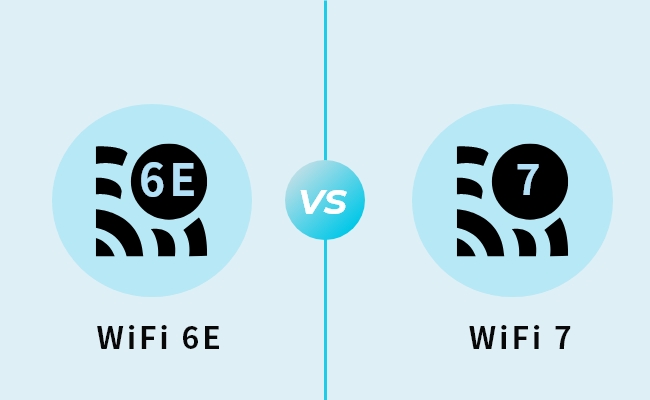
Three generations of wireless are on the shelf at once. Here is where each one genuinely helps, where the marketing outruns reality, and how to decide without overspending.
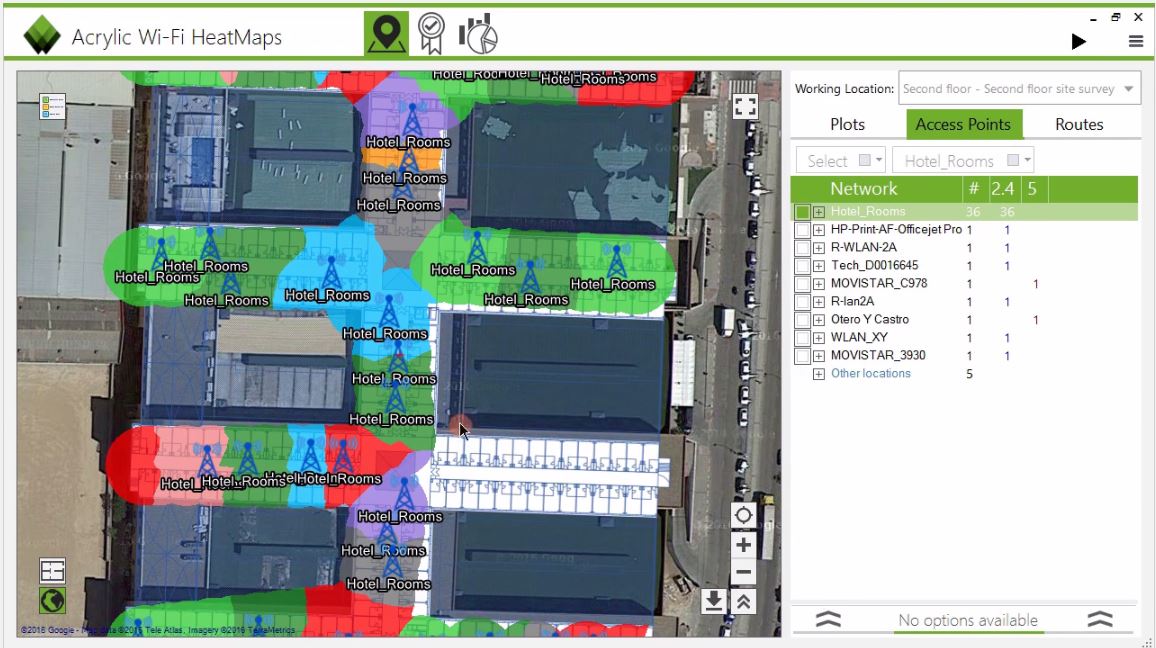
Predictive, passive, active and spectrum surveys explained — what each one proves, the gear involved, and the deliverables a serious survey should hand you.
Book a site survey and we will map your building, recommend the right hardware and give you a fixed, itemised quote — usually within three business days.